
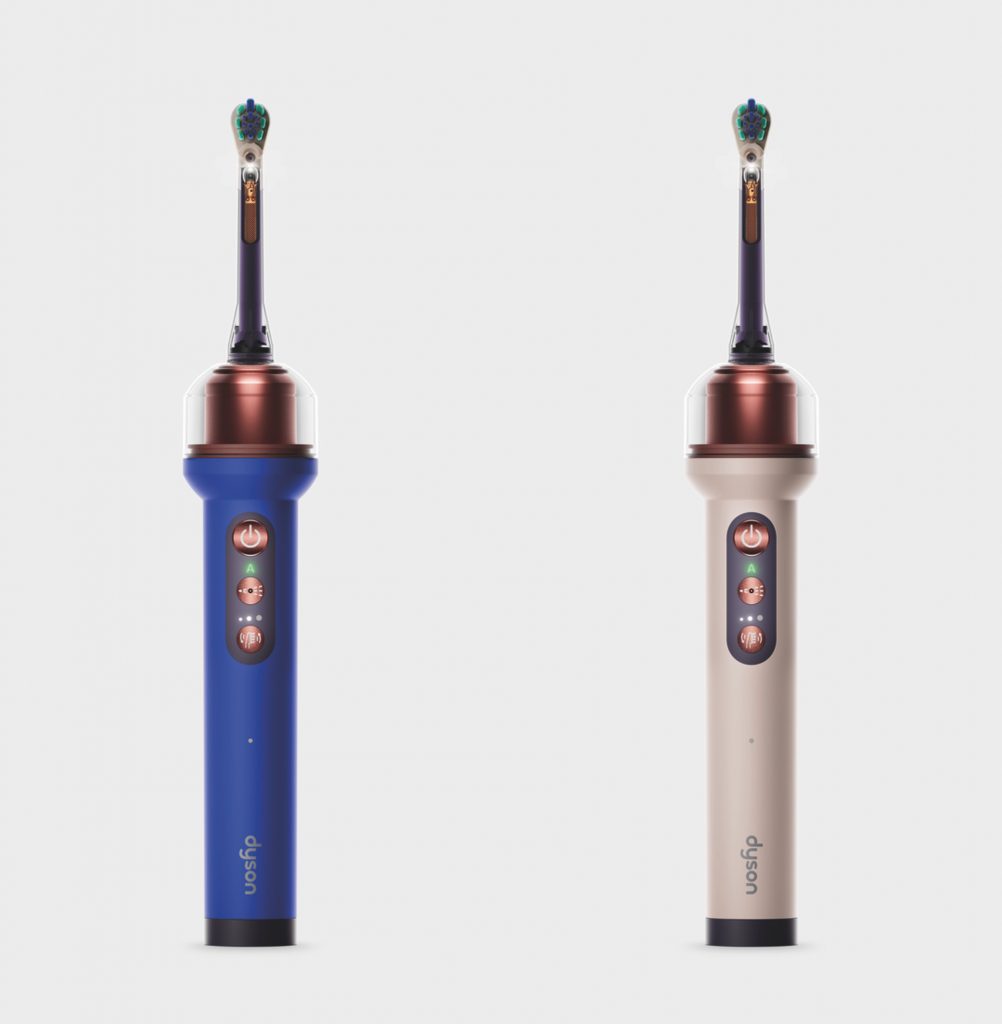
Dyson is getting into the oral care business with what is probably its most unusual product yet. Meet the Dyson CameraJet, a smart electric toothbrush that combines a camera, machine learning and a precision jet to brush and floss your teeth at the same time.
Unveiled by James Dyson in Paris, the CameraJet has been six years in development and involved 661 Dyson engineers. The company says it has filed 38 patents for the new oral care system.
At the heart of the CameraJet is a built-in macro camera which Dyson says can identify gaps between your teeth in real time. Once a gap is detected, the toothbrush can automatically fire a precision jet of mouthrinse to clean between your teeth while you continue brushing.
And yes, you can even livestream the inside of your mouth to your smartphone.
Dyson CameraJet uses AI to find the gaps between your teeth
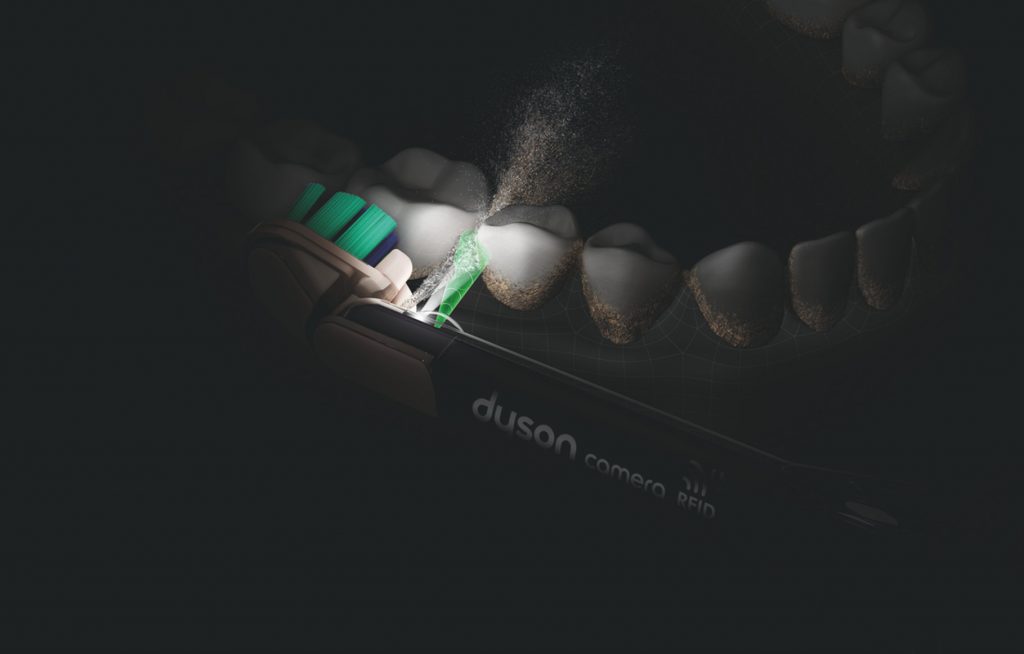
Dyson calls its camera-based system Gap Optical Targeting which uses a 100,000-pixel (0.1MP) macro camera that scans 28 live images per second. It works with Dyson’s machine learning algorithm to identify, track and predict gaps between your teeth.
According to Dyson, the system can detect a gap and trigger its jet within 100ms of the camera seeing it.
Instead of the narrow needle-type stream typically used by water flossers, Dyson has developed a broader conical jet. The company says this allows it to sweep and remove plaque while operating at a lower pressure to be gentler on the gums and enamel.
Dyson added that the CameraJet runs on 16 million lines of code, while its machine learning system was developed using more than 470,000 dental images.
The toothbrush itself uses what Dyson calls variable sonic oscillation. According to the company, conventional sonic toothbrush bristles can stall when pressed against the surface of a tooth. Dyson’s system varies the angle of oscillation to keep its bristles moving.
Dyson claims external testing found its variable sonic oscillation removes up to 69% more plaque than market-leading premium electric toothbrushes in hard-to-reach areas. This claim is based on laboratory testing in brush-only variable mode.
It has a mouthrinse tank and a dock that refills it in three seconds
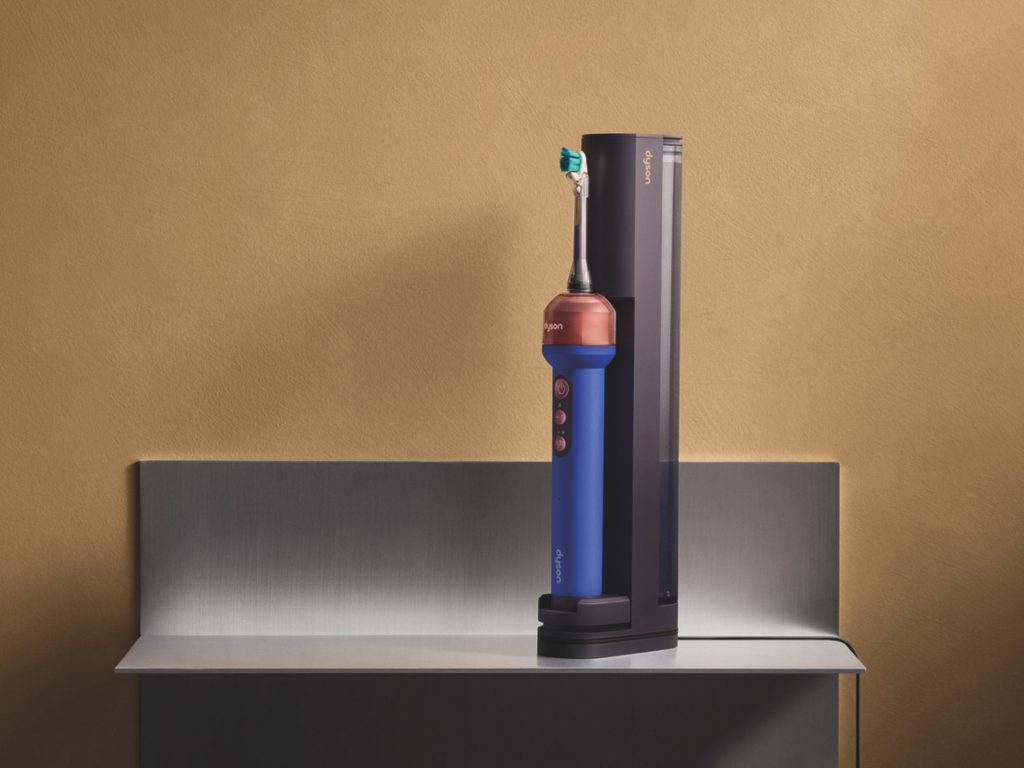
Built into the CameraJet is a 12.5ml mouthrinse tank, which is designed to hold enough mouthrinse for a single cleaning session.
Dyson uses what it calls an anti-gravity tank with a diaphragm pump and pressure chamber. The system is designed to maintain a consistent flow regardless of whether you’re holding the toothbrush upright, at an angle or horizontally. This is particularly important when you’re trying to reach the back of your teeth.
Once you’re done, the CameraJet can be placed into its docking station, which charges the toothbrush and refills its mouthrinse tank at the touch of a button. Dyson says the refill process takes just three seconds.
Even the toothbrush head has RFID
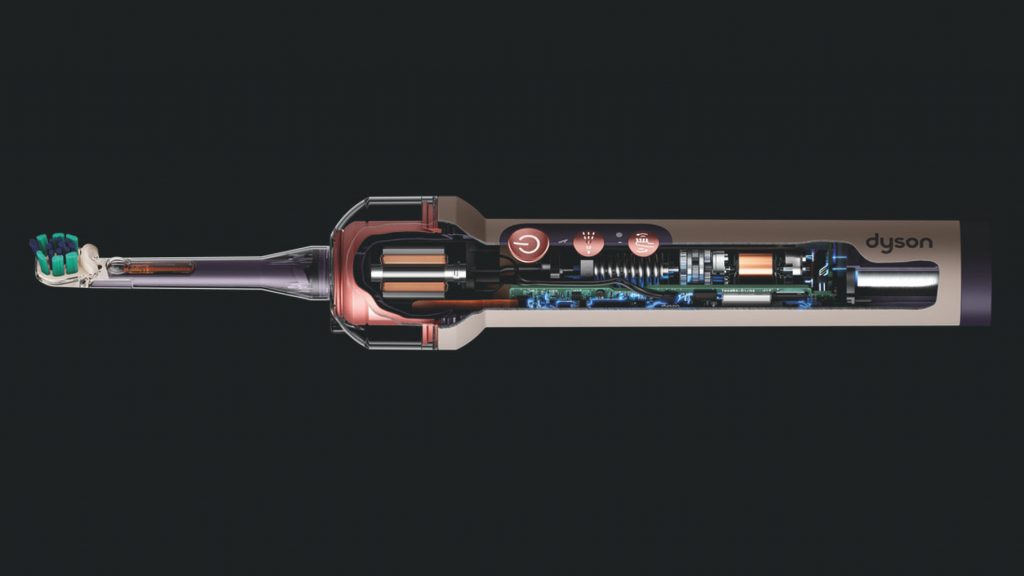
Dyson has also developed its own Dual Bristle Brush Head with two different types of bristles.
Slightly firmer inner bristles are designed to remove surface stains, while softer outer bristles clean along the gumline.
Interestingly, each brush head also comes with its own RFID tag. This allows the CameraJet to recognise the attached brush head, keep track of how many cleaning sessions it has completed and alert you when it is time for a replacement.
A sensitive version of the brush head will also be offered for users with sensitive teeth and gums.
You can livestream the inside of your mouth
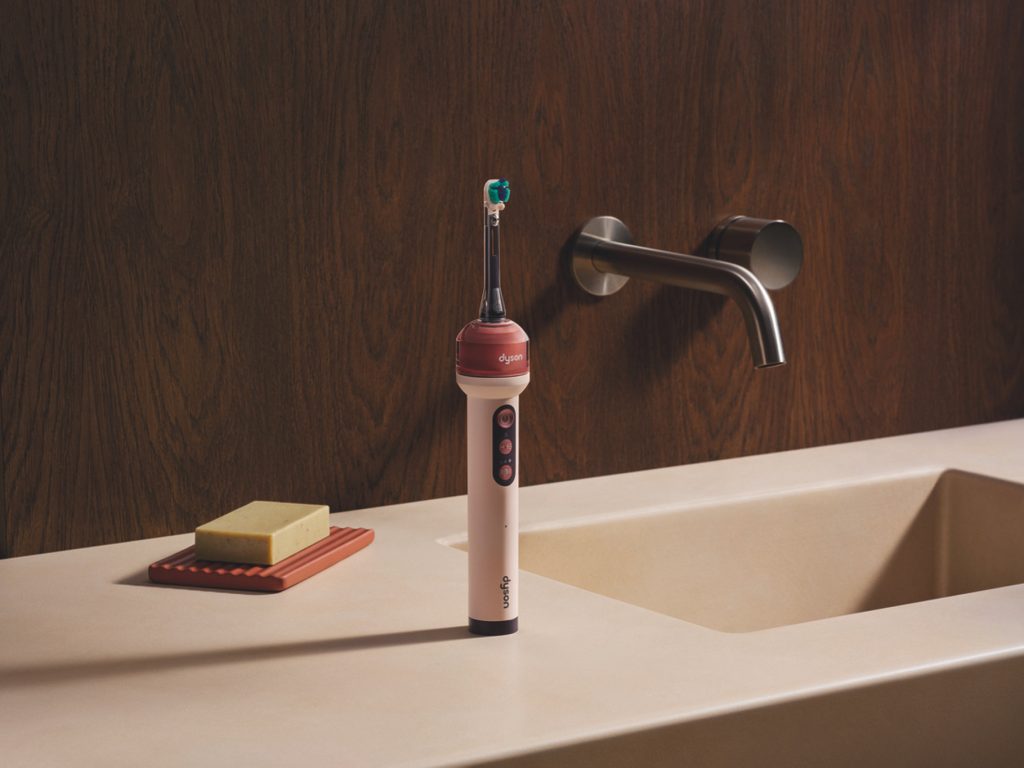
Because the CameraJet has a camera, Dyson is also letting you use it as an endoscope.
The toothbrush supports 2.4GHz WiFi and Bluetooth connectivity, and users can access a live view of the camera through the MyDyson app.
Dyson says the camera is only active during live viewing or when the automatic jetting function is being used. Images are not recorded or stored on the toothbrush or in the cloud.
The MyDyson app also provides guided cleaning, brushing and flossing insights, coverage mapping and personalised feedback. Users can also choose between automatic and manual jetting modes and adjust the brushing intensity.
Dyson made its own toothpaste because regular toothpaste is too foamy
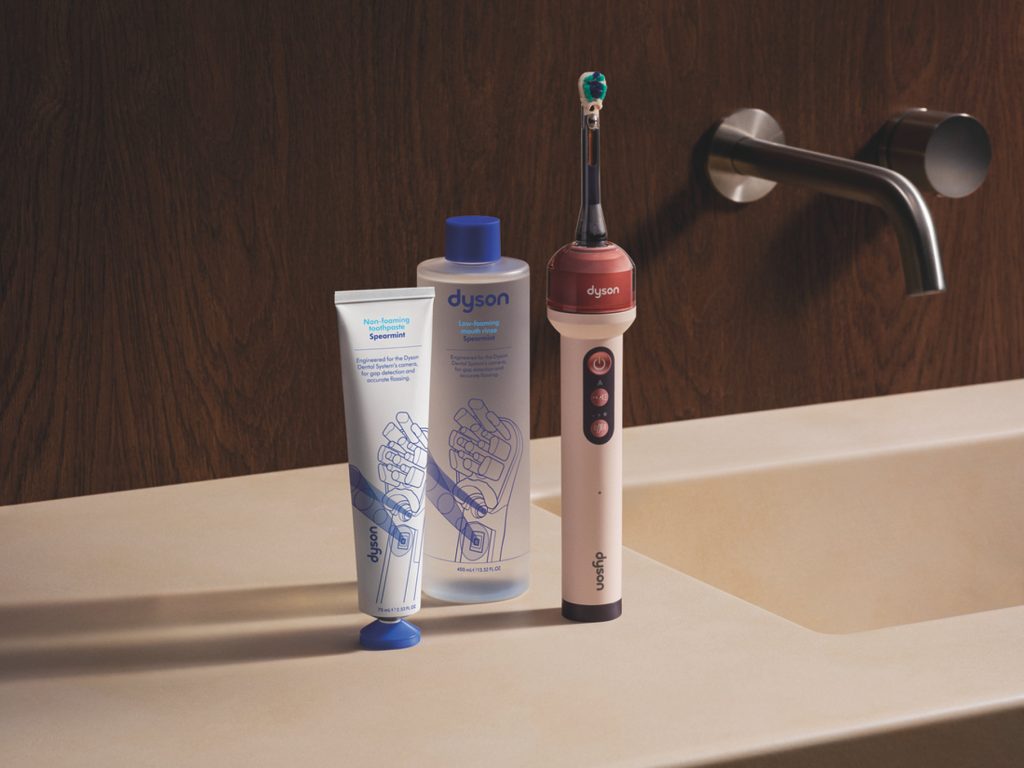
Perhaps one of the more interesting details about the CameraJet is that Dyson didn’t stop at making the toothbrush. It developed its own toothpaste and mouthrinse as well.
Dyson’s toothpaste is non-foaming and formulated without SLS, a common foaming agent. There’s actually a technical reason for this. Dyson says reducing the amount of foam helps keep the CameraJet’s view clear so its Gap Optical Targeting system can see the gaps between your teeth.
The accompanying mouthrinse is also formulated to produce less foam when used with the precision jet.
Both the toothpaste and mouthrinse contain sodium fluoride, along with phosphates and xylitol. They will be offered in Ginger Mint and Spearmint flavours, while a Peppermint Sensitive toothpaste will also be available.
Six year development with 661 engineers
Dyson revealed that the CameraJet took six years to develop, involving 661 engineers on the project and a total of 38 patents filed.
The company also worked with 30 dental professionals globally during development.
To study plaque removal, Dyson collaborated with the National University of Singapore’s Faculty of Dentistry for five years to develop what it describes as proxy plaque. This allowed its engineers to test and optimise the CameraJet’s water jet without requiring a clinical trial for every design iteration.
How much is the Dyson CameraJet? When is it coming to Malaysia?
Dyson has confirmed that the CameraJet is coming to Malaysia, but you’ll have to wait a little longer for local availability and pricing.
They have started registration of interest while official Malaysian pricing has yet to be revealed.
In the US, the CameraJet is priced at USD499 (about RM2,015) while in Singapore, it’s going for SGD 699 (about RM2,217).
Dyson CameraJet is a smart toothbrush with a camera, AI and precision water jet
News Reports PH


0 Comments