
After a long wait, the severely delayed EV Charger along LPT highway is finally online.
Shell Recharge’s 180kW DC Charger at Temerloh RNR (KL Bound) is finally turned on after it was deployed over 28 months ago. This is an ideal EV charging stop for those who need to charge while travelling between Gambang and KL.
The 180kW DC Charger was installed in early 2024, even before Proton e.MAS 7 was launched.
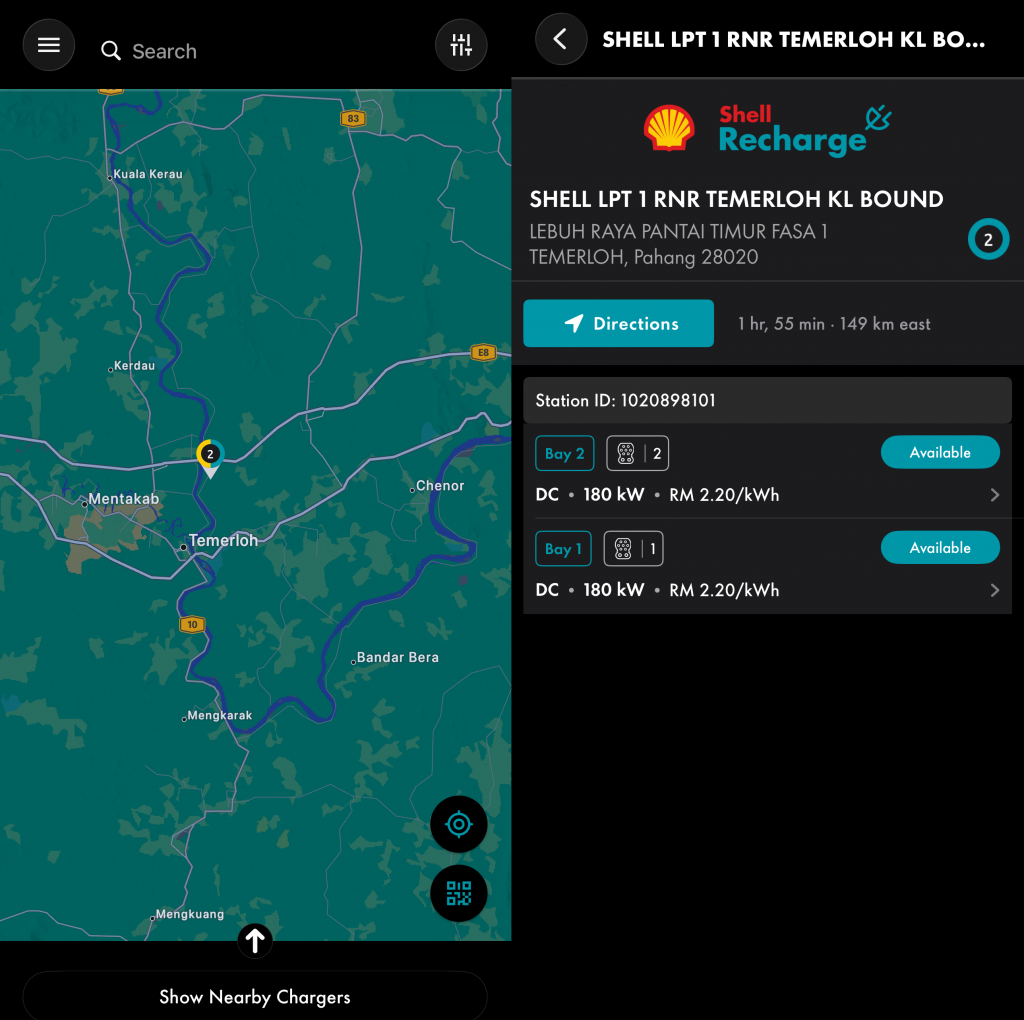
For this location at Temerloh R&R Westbound. Shell Recharge has deployed a 180kW DC Charger with two CCS2 nozzles. Like most Shell Recharge locations, the charging bays are covered and are priced at RM2.20 per kWh.
You can activate the charger via the Shell Recharge app.
Oddly, the Shell Recharge DC Charger across the highway at Temerloh R&R Eastbound is no longer listed on the app. The 180kW DC Charger on the Eastbound side went live back in November 2024 and it is also priced at RM2.20 per kWh.
Delay exposes challenges and red tapes to deploy chargers along highways
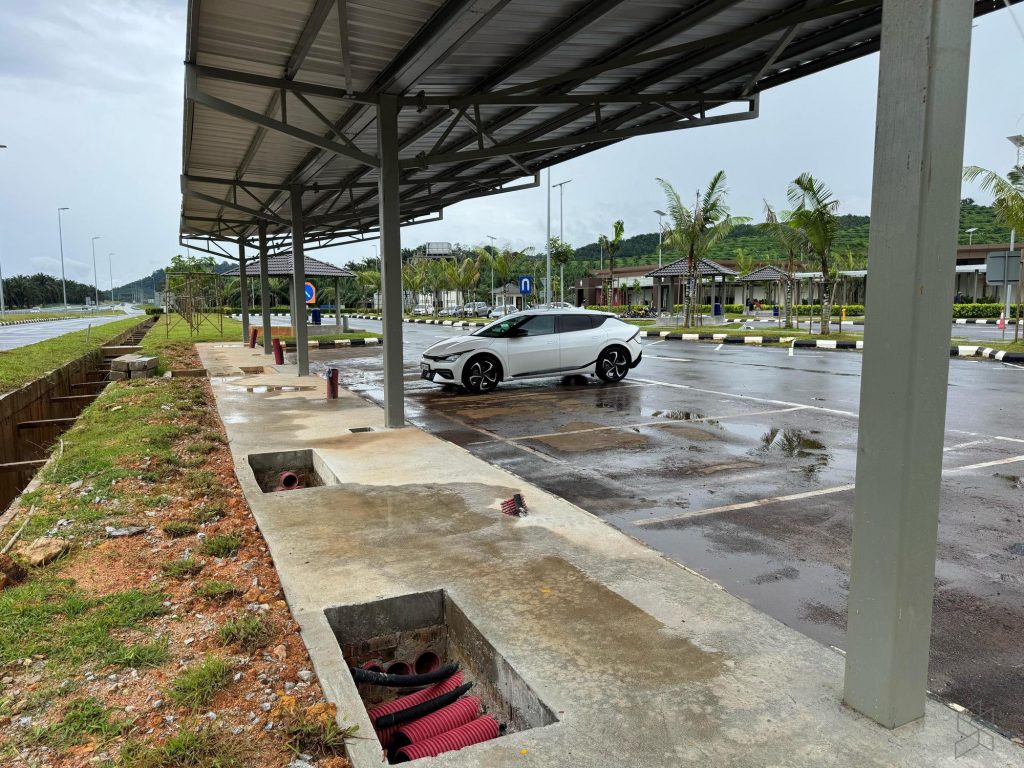
After missing last year’s target to achieve 10,000 EV charge points by 2025, Malaysia has set a new goal of having 30,000 EV charge points by 2030.
Most recently, it was revealed during the tabling of Budget 2027 that the Malaysian Highway Authority (LLM) will provide 50 EV charging stations. Assuming that target is for 2027, that’s an average of 1 EV charging station per week.
According to JPJ data, there are now over 180,000 electric vehicles registered so far and based on last month’s data, total EV registrations accounted for 8% of total industry volume.
With more EVs on the road, there’s an urgent need to ensure infrastructure readiness to support peak holiday season. However, it appears that there are more challenges, barriers and red tapes that hamper EV charger rollout along the highways.
This ranges from approval from local authority and regulators to power grid upgrades.
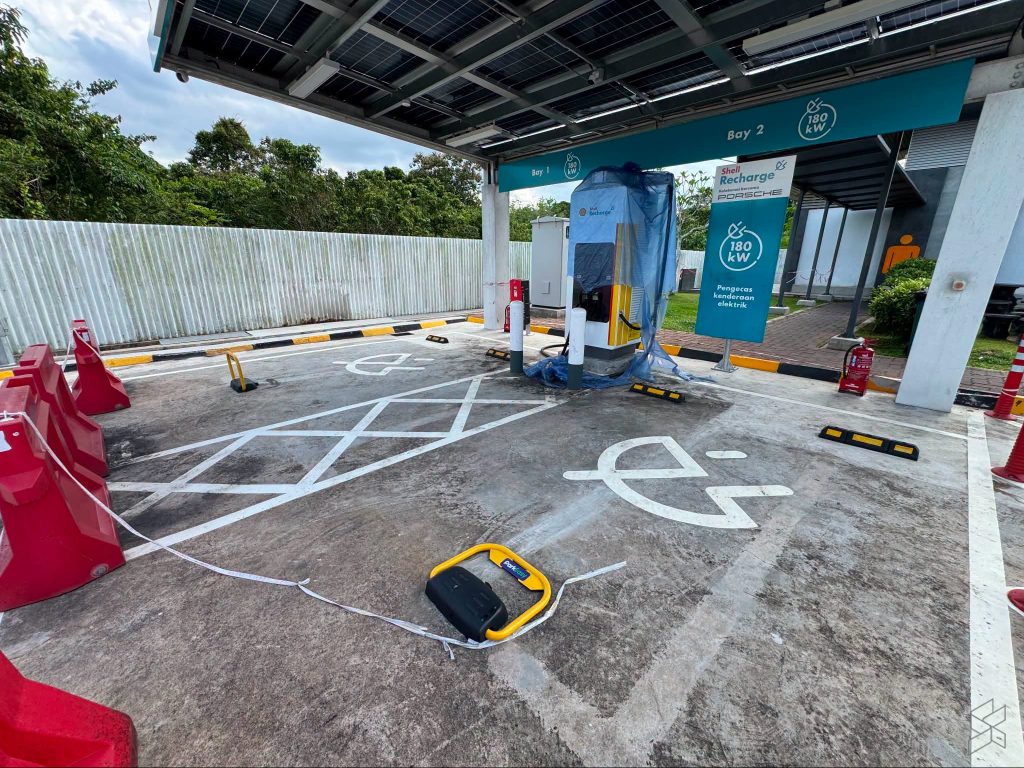
The latest activation of Shell Recharge charger at Temerloh R&R KL Bound exposes the lack of clear coordination and urgency to ensure swift deployment of EV charging infrastructure.
Another recent example is TNB Electron’s 240kW EV Charger at Rawang R&R Northbound which was planned in 2023 and it finally went live in September 2026.
As we’ve highlight previously, it takes an average of 3-4 months to install and deploy an EV charger along highways in our neighbouring countries. However, it Malaysia, the same deployment on highways take an average of 18 months.
Due to these challenges, it is not surprising to see charge point operators (CPO) deploying EV chargers off the highway.
For example, for those travelling on LPT between Kuala Lumpur and Kuantan, it is better to exit at Gambang to charge as there are multiple high-powered DC Chargers such as TNB Electron Makmur Gambang Jaya 2, Gentari Petronas KM26 and Gentari Pahang Technology Park.
In Mentakab and Temerloh, there are also more DC charging options including TNB Electron Wisma TNB Temerloh and DC Handal BHPetrol Taman Perindustrian Temerloh
If Malaysia is serious about speeding up transition to green mobility and to reduce expenditure on fuel subsidies, it should provide a green lane to expedite planning, execution and approval of EV charger deployment.
In addition, the government should be looking at providing more incentives to CPOs to encourage more private investment into EV charging infrastructure. Unfortunately, it appears that tax incentives for CPOs are being scaled back under Budget 2027.
[ IMAGE SOURCE ]
Shell Recharge activates 180kW DC Charger at Temerloh RNR KL Bound, over 28 months after installation
News Reports PH


0 Comments